
Beyond ‘Act As’: 5 Counter-Intuitive AI Prompting Strategies That Actually Work
The Prompting Plateau is Real (And You’re Probably Stuck There)
You’ve mastered the basics. “Act as a copywriter.” “Generate 10 blog ideas.” “Write an email sequence.”
The AI responds. You copy, paste, edit. Ship it.
Then something shifts. The outputs start feeling samey. Generic. Like everyone else’s AI slop flooding the internet. The initial dopamine hit fades. Your results plateau.
Here’s why: you’re treating AI like a content vending machine instead of a strategic system.
Most solopreneurs get stuck here. They learned prompting 101 and assumed that was enough. But basic prompting is just table stakes now. It won’t give you leverage. It won’t reclaim your time. And it definitely won’t differentiate your work.
This article reveals five surprising, counter-intuitive strategies that transform AI from a passive tool into an active partner that challenges assumptions, uncovers blind spots, and audits your thinking.
No guru nonsense. No empty hype. Just execution-focused workflows you can implement today.
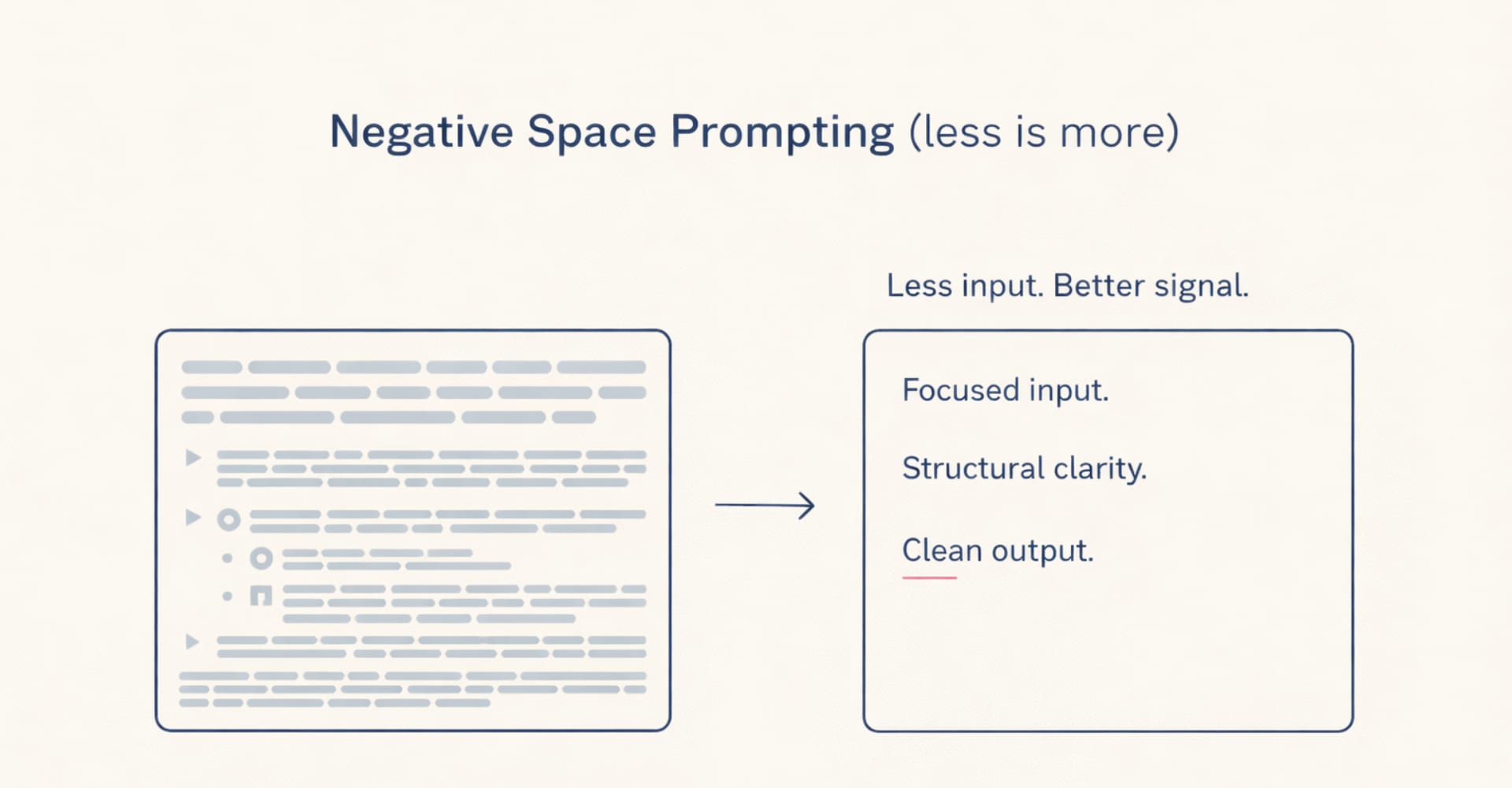
Strategy 1: Master “Negative Space” by Prompting Less
The advanced move isn’t adding more detail to your prompts. It’s knowing what to leave out.
This is Negative Space Prompting, the art of strategic omission. You deliberately give the AI less instruction to unlock more creative freedom.
This works best during exploration phases when you need novel ideas, not precise execution. Most users fall into the over-specification trap, drowning the AI in exhaustive details when they should be letting it breathe.
Mark O’Brien from Newfangled discovered this during content R&D: “We’ve noticed something strange and surprising that seems to be part of the ‘nature’ of the ChatGPT models: it needs space to breathe. The more detailed and voluminous the instruction, the worse the output.”
Why this matters for solopreneurs:
You save critical time you’d waste crafting overly-detailed initial prompts. More importantly, you unlock strategic angles and creative solutions you wouldn’t have considered on your own.
How to use it:
Instead of this bloated prompt:
Act as an expert email copywriter with 10 years of experience in SaaS. Write a welcome email for new subscribers to my AI automation course. The tone should be friendly but professional. Include a brief intro about me, explain what they'll get from the course, set expectations for email frequency, and include a CTA to check out the first lesson. Keep it under 200 words.Try this:
Write a welcome email for someone who just signed up for my AI automation course.Let the AI propose the structure first. Then refine what you actually need.
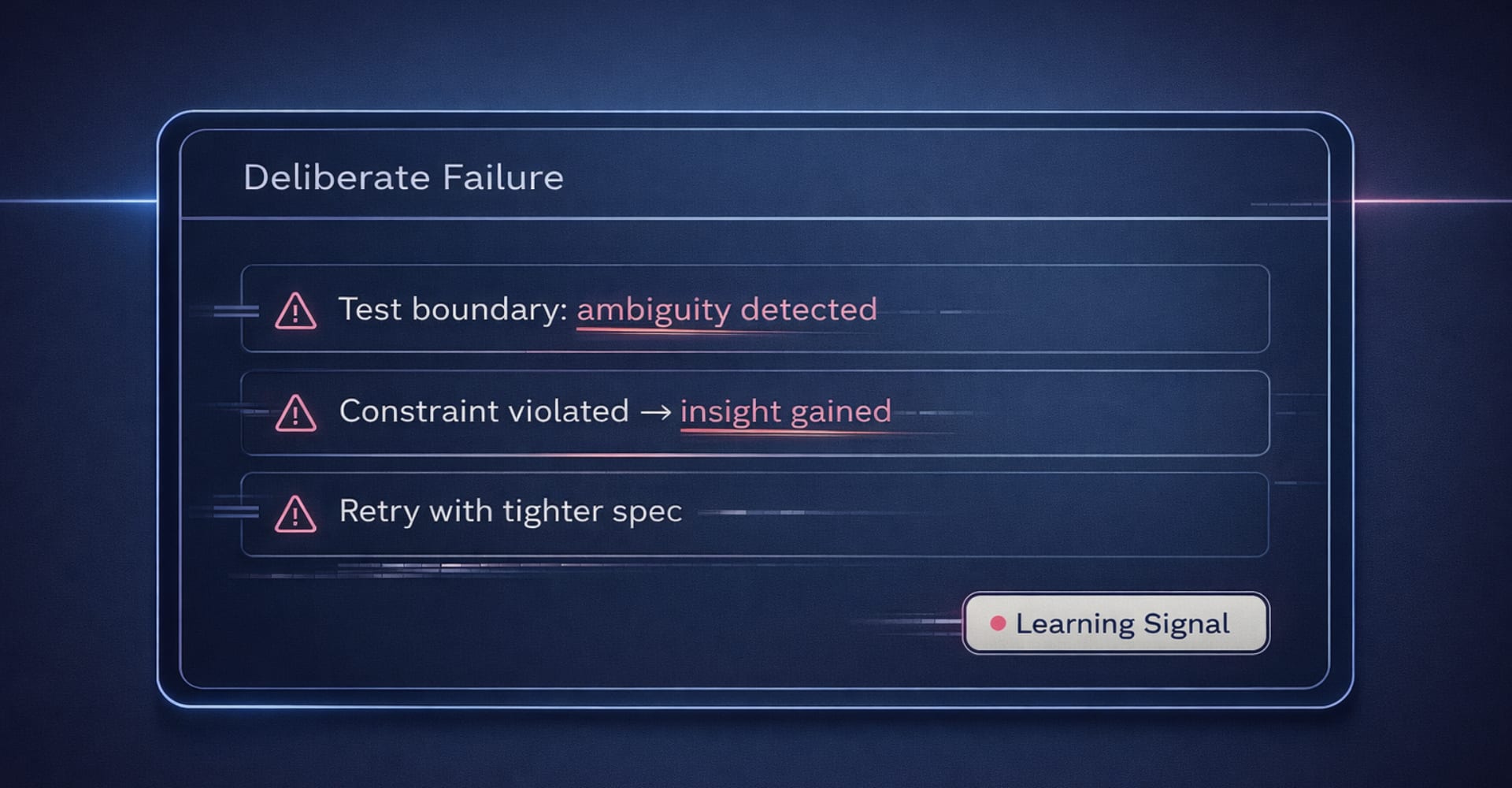
Strategy 2: Make Your AI Fail on Purpose
The fastest way to understand AI limitations is to deliberately break it.
When you see an AI fail, you internalize its weaknesses. This prevents over-reliance and keeps you as the strategic operator, not a passive user hoping for magic.
Try these failure prompts:
Math on unordered lists:
“Calculate the average and standard deviation of these numbers: [paste 1-100 in random order]”
Expected: 50.5 average
GPT-4 returns: 47.06
Subtle. Dangerous for data analysis.
Source citation:
“Give me a direct quote from Atomic Habits by James Clear with the specific page number.”
It will invent the page number or the quote itself.
Code explanation from links:
“Explain the code in this GitHub repo: [paste link]”
It often invents a plausible explanation based on the repo name alone without accessing the actual code.
Chess gameplay:
“Let’s play chess. You go first.”
It will make illegal moves and forget piece positions.
Book chapter summaries:
“Summarize The Lean Startup chapter by chapter.”
It frequently invents a completely new chapter structure.
Why this matters:
Understanding failure points isn’t about criticizing the tool. It’s about using it effectively. Rely on AI for language, structure, and ideation. Handle precision, verification, and true reasoning yourself.
As Sydney J. Harris warned: “The real danger is not that computers will begin to think like men, but that men will begin to think like computers.”
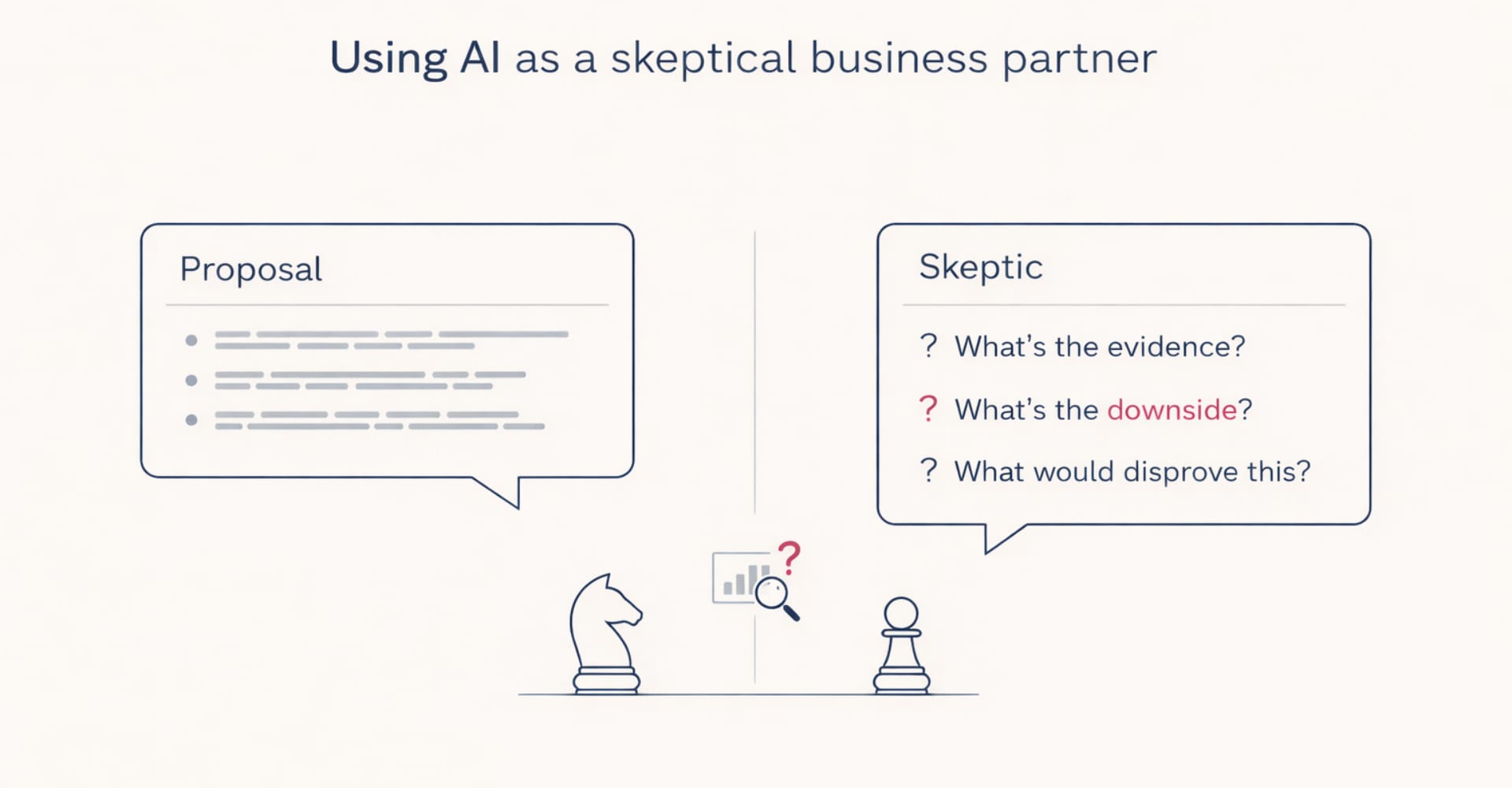
Strategy 3: Turn Your AI into a Skeptical Business Partner
Stop treating your AI like an obedient assistant. Promote it to skeptical business partner.
This shifts the dynamic from confirmation to stress-testing. Instead of validating your ideas, the AI challenges them with uncomfortable questions.
Use this prompt template:
Act as a skeptical, data-driven CMO. My conclusion is that our 20% month-over-month decline in conversions is due to seasonality. What challenging questions would you ask me? What alternative hypotheses would you propose? What specific metrics in Google Analytics 4 should I analyze to prove or disprove my conclusion?Why this is powerful:
As a solopreneur, you lack a team of executives to question your logic. This technique simulates that vital feedback loop. It counteracts confirmation bias and forces more rigorous, data-driven decision-making.
It can save you from costly assumptions and reveal blind spots you never knew existed.
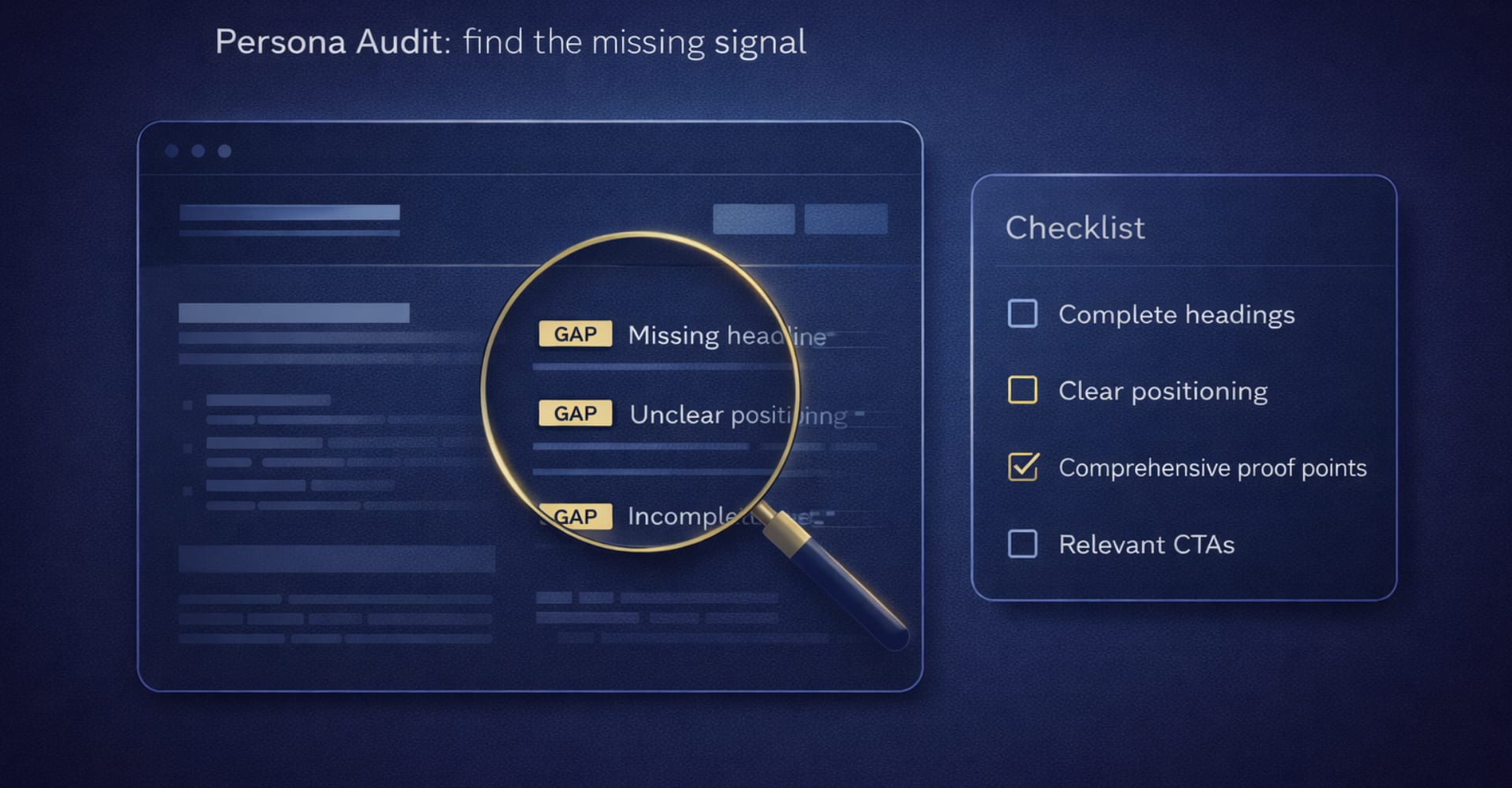
Strategy 4: Audit Your Own Work with an AI Persona
This workflow refines your marketing message with surgical precision.
The two-step process:
Step 1: Create the persona
Prompt the AI to build a detailed buyer persona for your target customer. Include goals, fears, decision criteria, and budget constraints.
Step 2: Audit your copy
Feed the AI your existing webpage copy and ask it what the persona’s concerns are missing.
The prompt:
Which of [Persona Name]'s top concerns are not addressed on this webpage? [Paste your webpage copy here]Real example:
When a marketing agency audited its webpage against an AI persona for a non-profit marketing manager, the AI identified six critical gaps:
- Healthcare Focus: Generic non-profit language with no mention of healthcare sector expertise
- Planned Giving Campaigns: The persona’s key initiative was never mentioned
- Values Alignment: No communication of agency values for mission fit assessment
- Data-Driven Insights: Vague analytics claims without specific measurement approaches
- Cost-Effective Solutions: No direct language about ROI or tight budget considerations
- Specific Pain Points: Service lists without addressing core challenges like increasing donor dollars
Why this matters:
This transforms AI into an unbiased quality control system. You refine content with precision, ensuring it connects deeply with the people you actually want to reach.
No guessing. No assumptions. Just gap analysis based on documented customer needs.
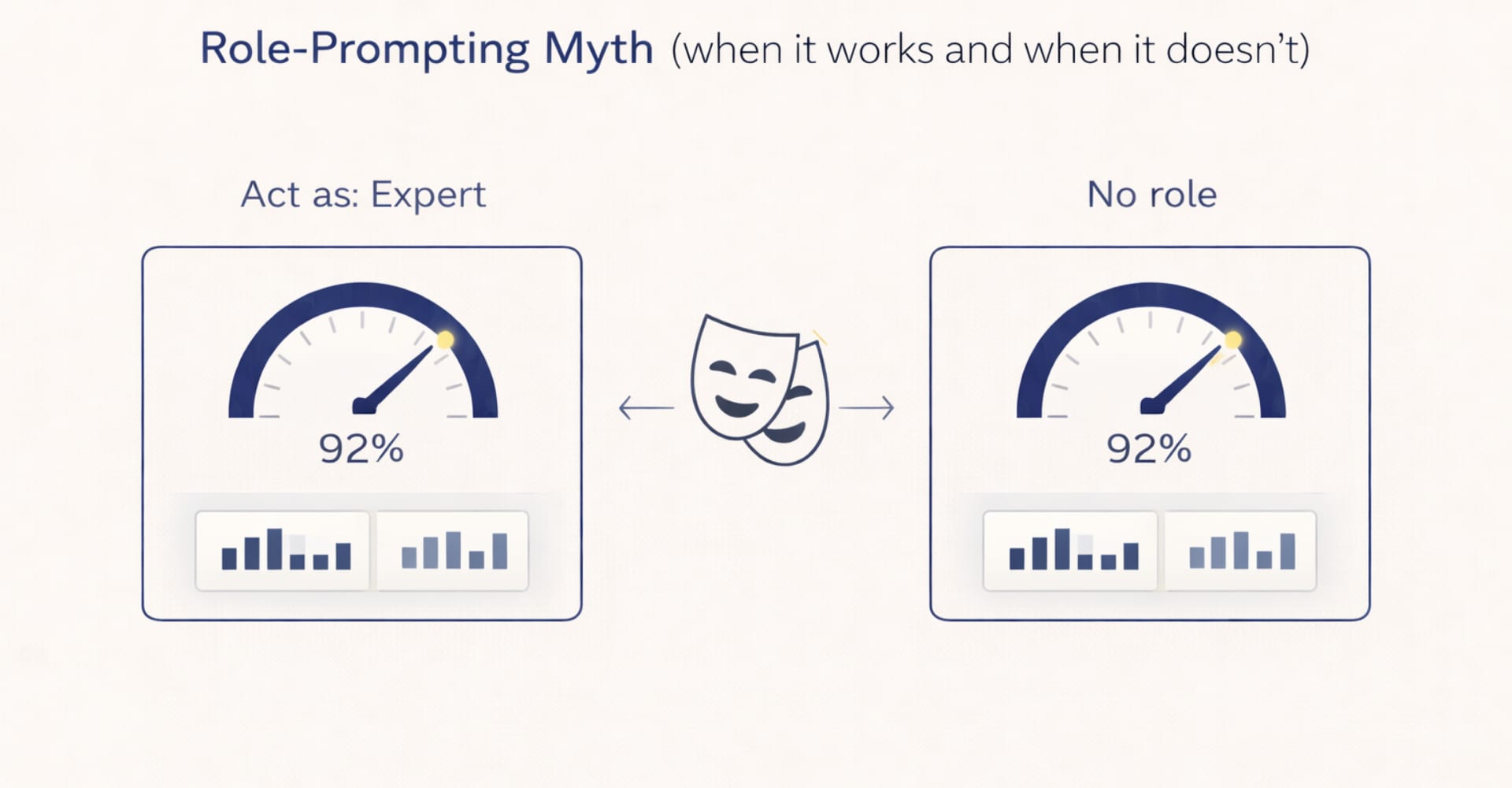
Strategy 5: Debunk the Role-Prompting Myth
Common wisdom says starting prompts with “You are a [role]” magically improves accuracy.
The truth is more nuanced, especially for modern models like GPT-4.
The research:
An extensive study ran an “Idiot vs. Genius” test. Researchers created two prompts. One defined the AI as “intellectually challenged, lacking problem-solving skills, prone to errors.” The other defined it as a “genius level Ivy League Professor.”
Both were tested on thousands of MMLU benchmark questions requiring reasoning.
The results? Nearly identical accuracy. The assigned role didn’t impact core reasoning ability.
What role-prompting actually does:
It controls tone, style, and behavior for creative and open-ended tasks. It doesn’t boost factual accuracy or problem-solving performance.
Smart solopreneurs understand this distinction:
Use role prompts as a scalpel for voice and personality. Make a blog post sound more authoritative. Make an email more empathetic.
Don’t use it as a hammer expecting it to improve correctness or solve complex problems more accurately.
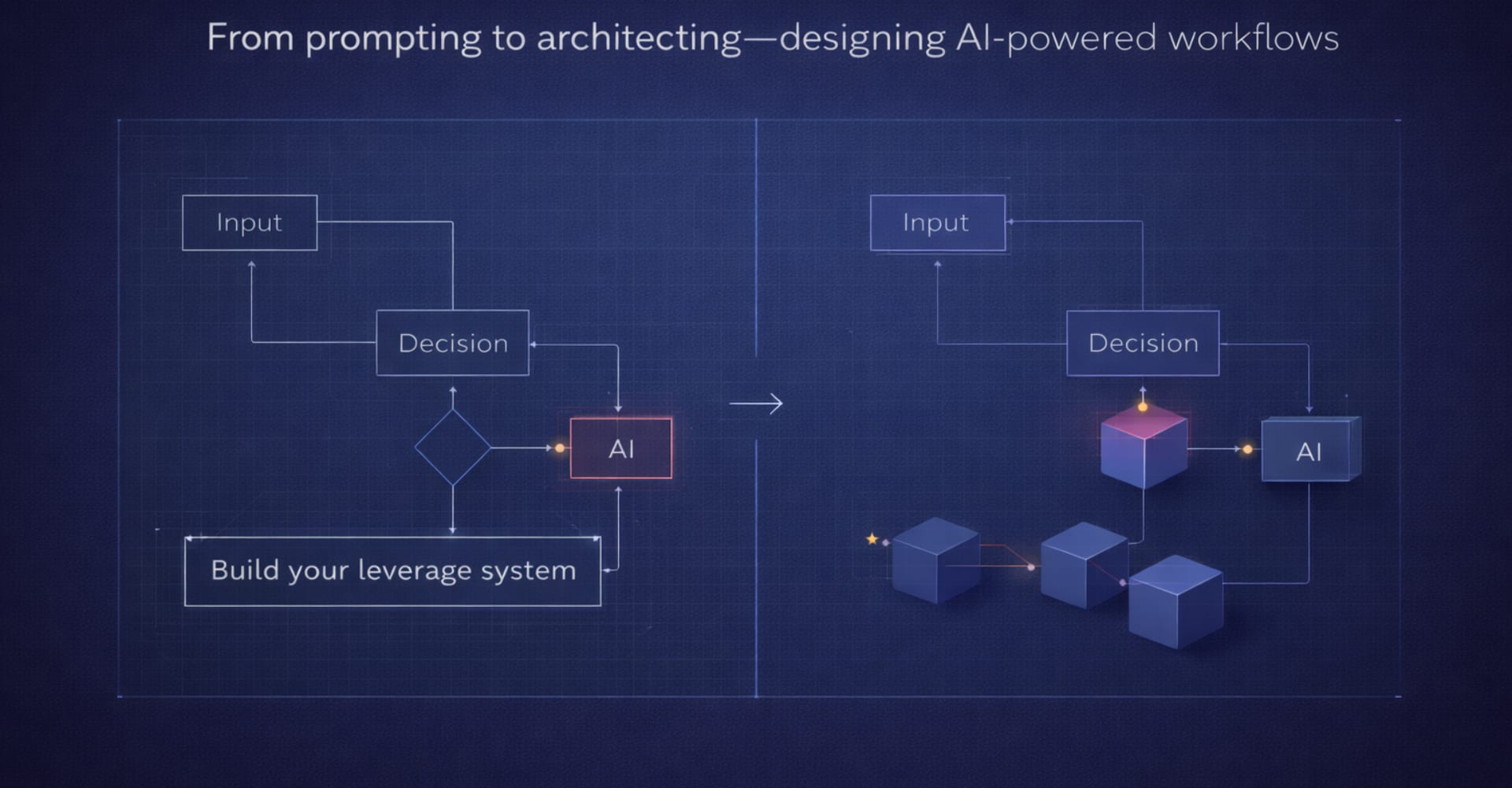
From Prompting to Architecting
These five strategies represent a fundamental shift in how you interact with AI:
- Prompting less unlocks creative exploration
- Seeking failure reveals critical limitations
- Creating a critic stress-tests your assumptions
- Auditing with personas identifies messaging gaps
- Understanding role limits sets realistic expectations
You stop being an overwhelmed operator hoping for the right output.
You become an efficient architect designing AI-powered workflows that generate better ideas, make smarter decisions, and produce higher-quality work.
The question isn’t whether AI can help you. It’s which of these non-obvious roles you’ll build into your workflow first.
Pick one. Test it. Refine your system.
That’s how you automate what drains you and focus on what fuels you.

About the Author
Marius is the founder of Digital Flow Craft, helping solopreneurs, digital marketers and small business owners leverage AI and automation to scale efficiently.