
The Evergreen Pinterest Traffic Framework: A Systems Approach for Creators and Marketers
“Most creators treat Pinterest like social media and burn out when it does not behave like one”
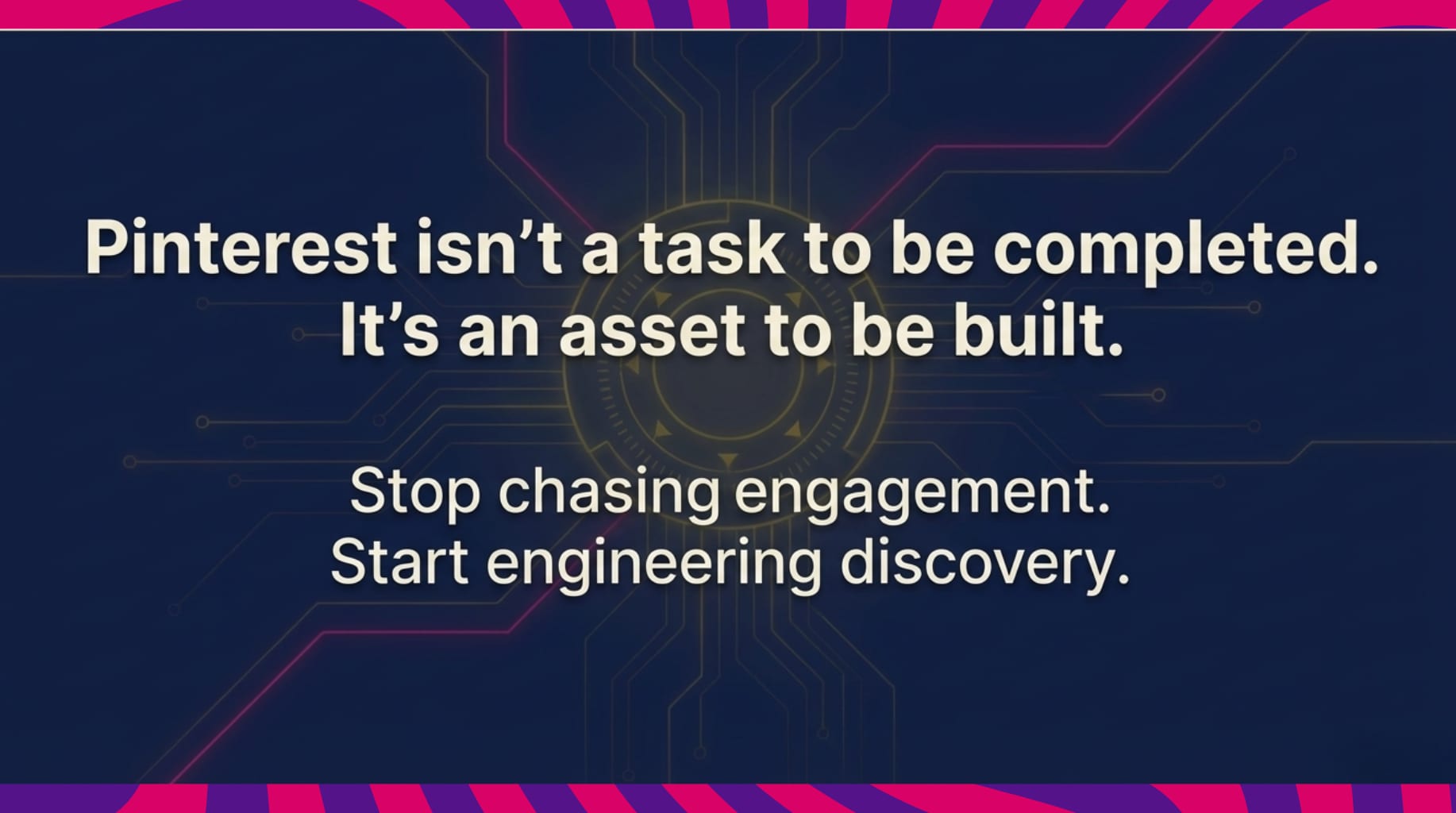
Digital Flow Craft approaches Pinterest differently. Not as a posting platform, not as a branding exercise, but as a search-driven system that compounds over time.
If you are a solopreneur building digital products, affiliate income, or evergreen content assets, Pinterest offers something rare, predictable discovery from people who are actively planning, researching, and deciding. No face required. No daily performance treadmill.
This guide is not about viral pins or growth hacks. It documents a repeatable, system-level framework for turning Pinterest into an always-on traffic layer that feeds blogs, landing pages, and offers long after the work is done.
What follows is the exact model Digital Flow Craft uses to think about Pinterest, from search intent and pin structure to faceless execution and sustainable funnels. Use it as a reference, not a checklist.
1. Why Pinterest is Different from Social Platforms
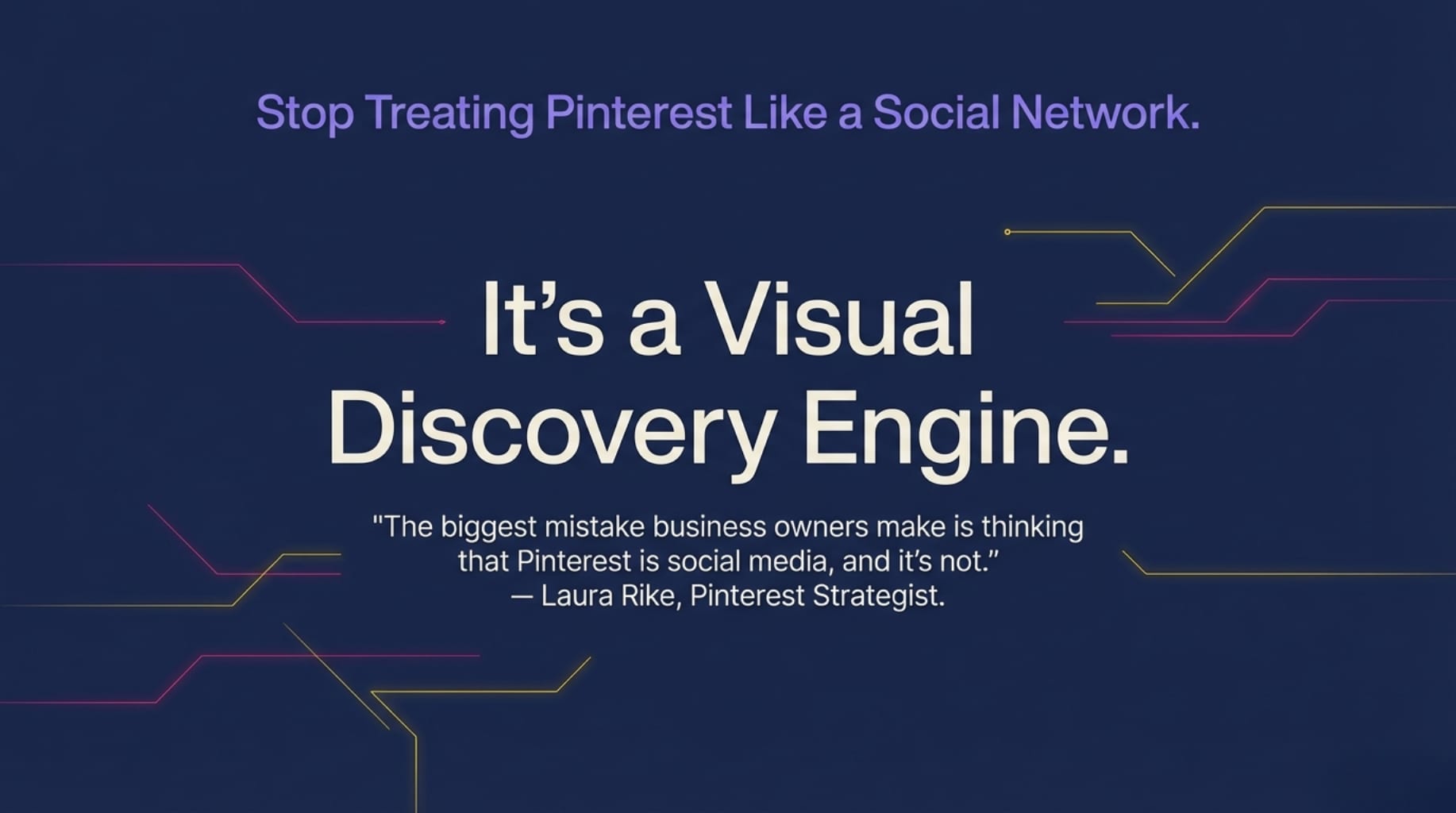
The primary error many marketers make is treating Pinterest as a social network. While social platforms prioritize real-time engagement and “virality,” Pinterest functions as a search-first platform where user intent and content relevance dictate visibility.
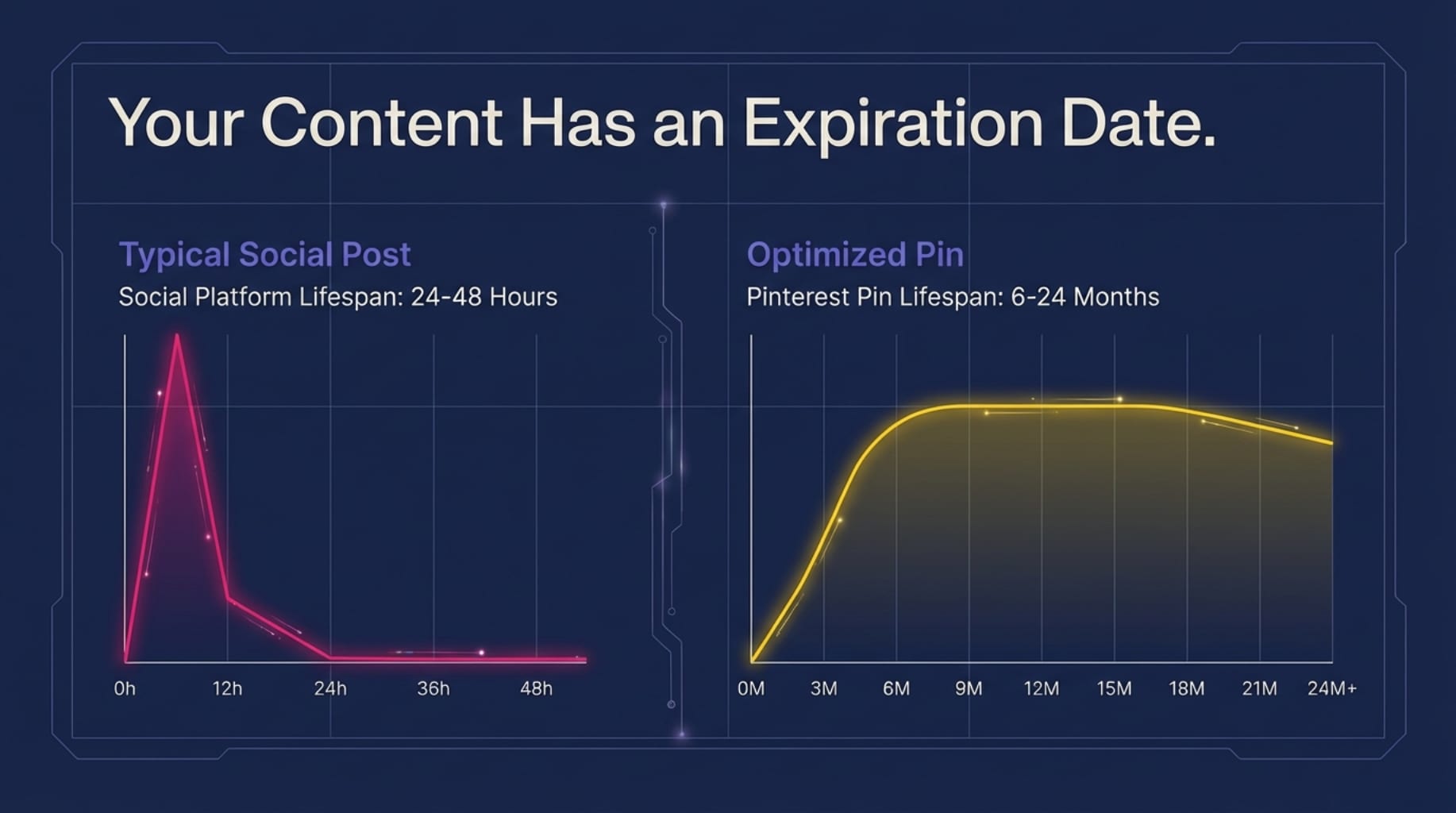
The Shelf Life of Content
On traditional social platforms like Instagram or Facebook, content depreciates within hours or days. On Pinterest, a well-optimized pin maintains relevance for 6 to 24 months. In fact, platform data indicates that viral pins often reach their peak distribution 1 to 2 years after they are originally posted.
Discovery vs. Engagement
- Social Platforms: Rely on followers, likes, and chronological feeds to distribute content.
- Pinterest: Uses a visual search algorithm to connect users with content based on keywords, visual similarity, and semantic relevance, regardless of the creator’s follower count.
Planning and Purchase Intent
Pinterest users are “planners” who use the platform to research future projects, life milestones, and purchases. This results in traffic that is significantly closer to a buying decision than users scrolling for entertainment.
2. How Pinterest Search Intent Works
Understanding how users search is the foundation of the Pinterest traffic system. Users typically move through a 21 to 30-day planning cycle before making a final decision or purchase.
Semantic SEO and AI Discovery
The 2025-2026 algorithm utilizes semantic understanding. It no longer relies on exact keyword matching; instead, it understands the underlying meaning of a query. For example, a search for “non-toxic skincare” will semantically link to “clean beauty” even if that phrase is not present in the metadata.
The Search Hierarchy
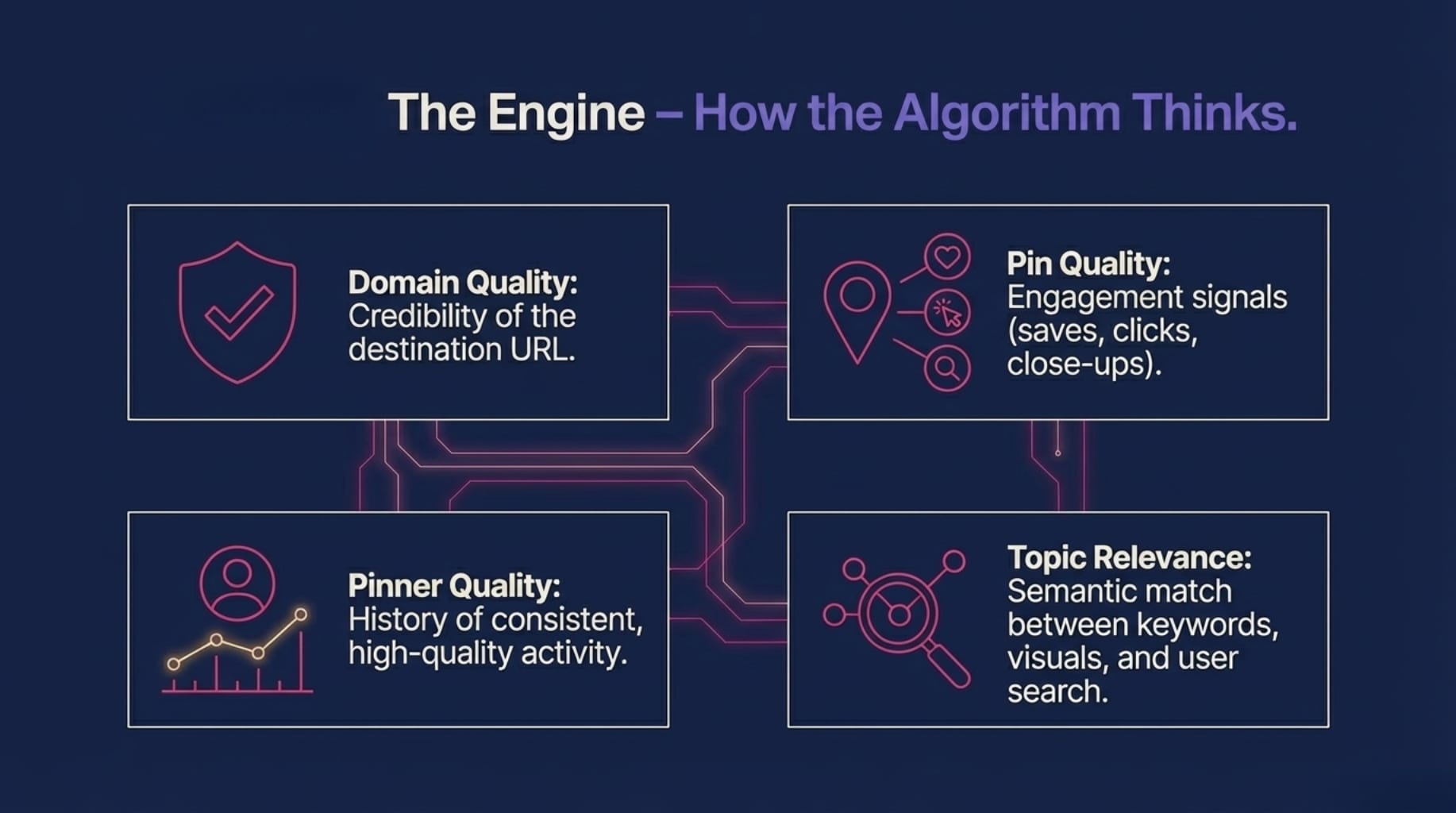
Pinterest evaluates content based on four primary quality signals:
- Domain Quality: The perceived credibility of the website linked to the pin.
- Pin Quality: Engagement signals such as saves, close-ups, and clicks.
- Pinner Quality: The account’s history of consistent activity and sharing high-quality content.
- Topic Relevance: How accurately the keywords and visuals match the user’s search
The Search Hierarchy
Pinterest evaluates content based on four primary quality signals:
- Domain Quality: The perceived credibility of the website linked to the pin.
- Pin Quality: Engagement signals such as saves, close-ups, and clicks.
- Pinner Quality: The account’s history of consistent activity and sharing high-quality content.
- Topic Relevance: How accurately the keywords and visuals match the user’s search
Identifying High-Intent Keywords
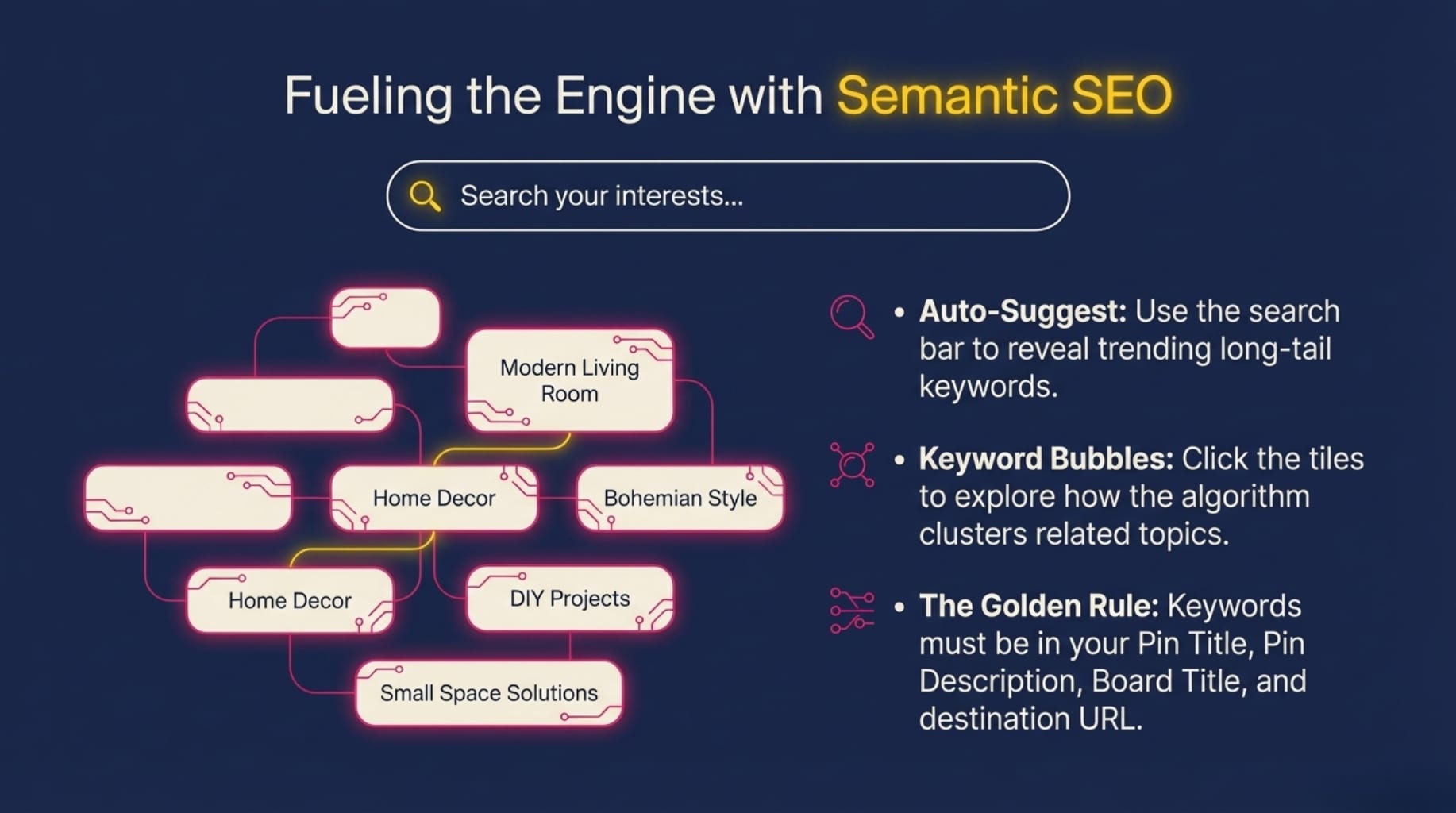
Research should be conducted using the platform’s native search bar.
Auto-suggest: Typing a broad term into the search bar reveals trending long-tail keywords.
Keyword Bubbles: The tiles appearing at the top of search results provide a visual map of how the algorithm clusters related topics.
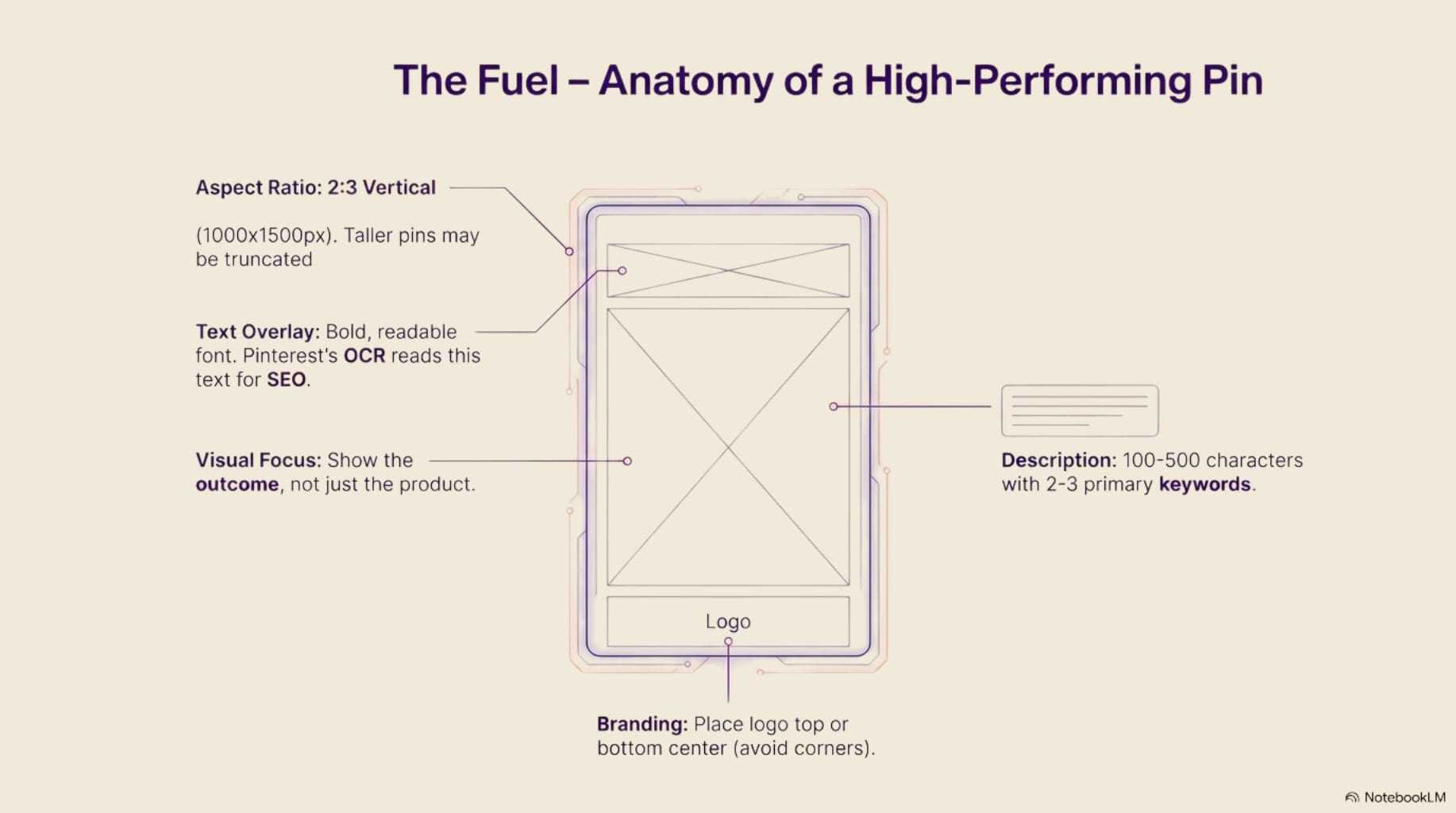
3. The Anatomy of a High-Performing Pin
A successful pin must serve two audiences: the user (visual appeal) and the algorithm (metadata clarity).
Technical Specifications
- Aspect Ratio: Use a 2:3 vertical aspect ratio (e.g., 1000 x 1500 pixels). Taller pins may be truncated or deprioritized.
- Resolution: High-resolution, bright, and clear imagery is mandatory to signal “Pin Quality”.
Visual Elements
- Text Overlays: Use bold, readable fonts. Pinterest uses Optical Character Recognition (OCR) to read text on images to determine search relevance.
- Outcome Focus: Show the result (e.g., a finished room or a styled outfit) rather than just the product to align with user planning.
- Logo Placement: Place branding in the top or bottom center. Avoid corners, as the “visual search” icon often covers those areas.
Metadata Elements
- Pin Title: Front-load with primary keywords; avoid vague or “cute” titles.
- Pin Description: Use natural language (100 to 500 characters) to incorporate 2-3 primary keywords.
- URL Optimization: Ensure the linked page’s slug and content contain the same keywords as the pin.

4. Faceless Content Strategies That Work Long-Term
Faceless marketing is an effective system for scaling multiple niches and reducing burnout. Trust in these niches is built through the utility and accuracy of the information provided rather than personal identity.
Information-Heavy Niches
Niches that solve specific problems thrive in a faceless format. Examples include:
- Finance and Investing: Data analysis, investment strategies, and charts.
- Home Improvement: Transformation videos and how-to guides.
- Tech and Software: Step-by-step tutorials and screen recordings.
The Faceless Asset System
- Visual Sourcing: Utilize royalty-free stock libraries (e.g., Pexels, Pixabay) to find footage relevant to the niche.
- AI Integration: Use high-quality AI voiceovers for video content or informative narrations.
- Unique Visual Branding: Establish a consistent color palette, font set, and graphic style to ensure brand recognition without a human face.
5. Pin → Blog → Offer Traffic Architecture
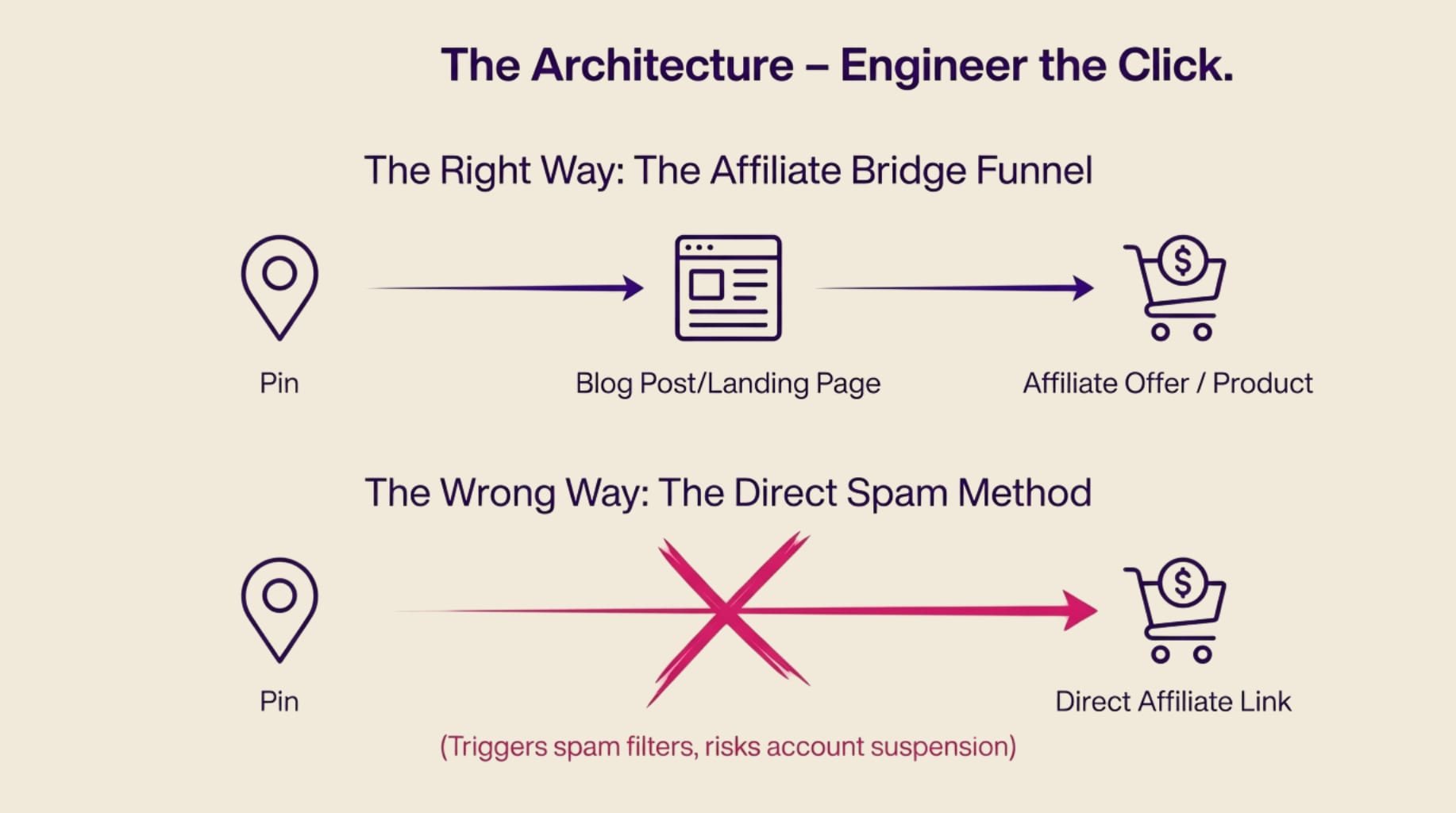
Driving traffic directly to a sales page is often high-risk and less effective for conversion. The “Bridge Funnel” is the recommended architecture for sustainable growth.
The Three-Step Funnel
- Stage 1: Discovery (The Pin): A high-quality graphic with a benefit-driven headline stops the scroll and generates an outbound click.
- Stage 2: Education (The Bridge Page): A blog post, tutorial, or review page provides immediate value and establishes authority.
- Stage 3: Action (The Offer): Contextual links within the bridge page guide the user toward an affiliate offer or digital product.
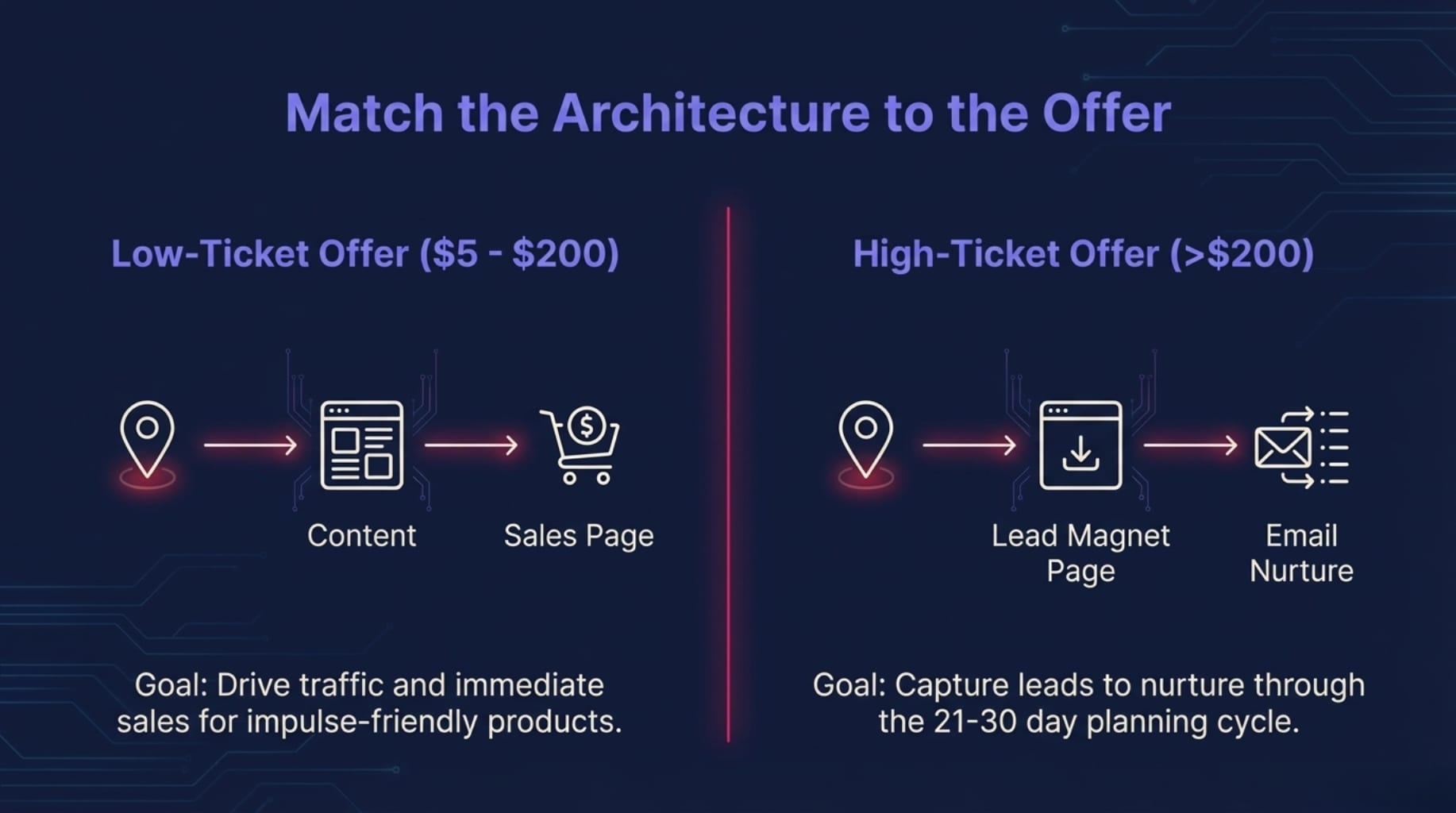
Lead Magnet Funnels
For digital products over $200, the architecture should include an email capture step. Pins drive traffic to a skimmable landing page offering a lead magnet (e.g., checklists, free tutorials) in exchange for an email address. This allows the entrepreneur to nurture the lead through the 21-30 day decision window.
6. Affiliate Marketing on Pinterest (Success vs. Failure)
Pinterest explicitly allows affiliate links, but success requires strict adherence to transparency and value guidelines.
What Fails: The “Direct Spam” Method
- Repeated Direct Linking: Pinning the exact same affiliate URL repeatedly triggers spam filters and leads to blocked domains.
- Link Cloaking: Using shorteners (e.g., bit.ly) to hide the destination of an affiliate link is prohibited and often results in account suspension.
- Low-Value Imagery: Using only the merchant’s provided product photos without original context or design.
What Works: The “Affiliate Bridge” Method
- Owned Assets: Driving traffic to a blog post or landing page containing the affiliate link protects the creator’s account from merchant domain issues.
- Mandatory Disclosure: Every affiliate-related pin or page must include clear disclosures like #affiliate or #ad to remain compliant with FTC and Pinterest policies.
- Original Value: Creating informative listicles or “problem-solving” content that naturally integrates the affiliate product.
7. Content Cadence and Expectations
Success on Pinterest is defined by consistency over volume.
Realistic Timelines
- Incubation (Months 1-3): Initial indexing occurs; pins begin to appear in search results, and follower growth ranges from 2-5% monthly.
- Traction (Months 3-6): The algorithm identifies high-engagement pins and expands distribution.
- Compound Peak (Months 6-18): Pins reach maximum distribution and become “legacy” traffic drivers.
Posting Frequency
Experts disagree on the specific number of daily pins, but the consensus on “Fresh Pins” (new images or videos) is as follows:
- Minimum Baseline: 1 to 5 pins per day.
- Ideal Sweet Spot: 6 to 15 pins per day, provided there is enough unique content to support it.
- System Limit: Avoid exceeding 25 pins per day, as this may trigger automated spam flags.
8. Common Myths and Mistakes
Myth: Followers are the Most Important Metric
Reality: Followers represent a small fraction of reach. The majority of traffic comes from the Home Feed and Search Results, where the algorithm prioritizes relevance over following.
Myth: Deleting Underperforming Pins Helps the Algorithm
Reality: Deleting pins does not improve an account’s overall performance. Underperforming pins may gain traction months later as search trends change; deleting them removes that opportunity.
Mistake: Repinning More than Creating
Pinterest has shifted away from a “repin-to-growth” strategy. It now prioritizes original creators who pin content from their own verified websites. One source states that repinning is primarily for users, not for creators seeking an algorithmic boost.
9. How to Scale Without Burning Out
Solo entrepreneurs must move from manual pinning to systems-based automation to maintain consistency.
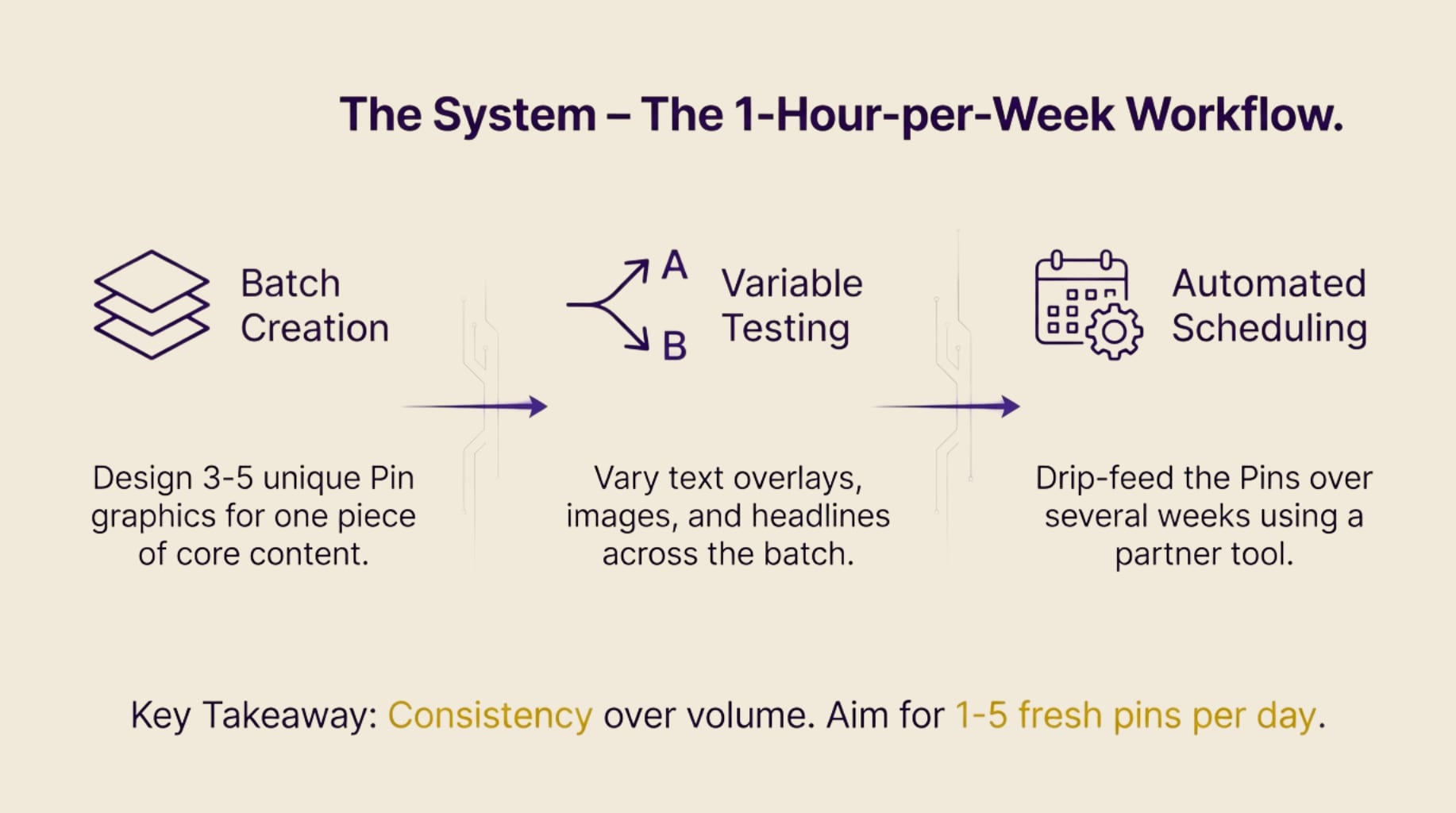
The “1 Hour a Week” Workflow
- Batch Creation: Select one piece of core content (blog or product) and design 3 to 5 unique pin graphics for it in one sitting.
- Variable Testing: Vary the text overlays, background images, and fonts across the batch to test what resonates with different search segments.
- Automated Scheduling: Use an official Pinterest Marketing Partner tool to drip-feed the batched pins over several weeks.
Seasonal Planning System
Because Pinterest users plan well in advance, content should be pinned 45 to 60 days before the seasonal peak. For example, holiday gift guides should be indexed by early fall to capture the surge in winter search traffic.
The Role of Virtual Assistants (VAs)
Once the system is profitable, a VA can handle repetitive tasks such as:
- Drafting keyword-rich pin descriptions.
- Uploading assets to scheduling tools.
- Formatting blog bridge pages.
- Monitoring analytics to identify high-performing “Legacy Pins” for future repurposing.
By focusing on search intent engineering rather than social engagement, entrepreneurs can build a traffic engine that operates independently of their daily presence.
Pinterest rewards patience, structure, and clarity, not constant presence.
When treated as a search engine and not a social feed, it becomes one of the few platforms where a solo operator can build real leverage, content that works while you are offline, and traffic that compounds instead of decays.
The system outlined here is intentionally boring in the best way. It favors owned assets over borrowed attention, funnels over posts, and consistency over bursts of effort.
This is how Digital Flow Craft designs channels that support long-term autonomy rather than demand daily maintenance.
Pinterest is not fast. But it is durable. Build it once, feed it correctly, and let it work in the background while you focus on creating assets that actually matter.

About the Author
Marius is the founder of Digital Flow Craft, helping solopreneurs, digital marketers and small business owners leverage AI and automation to scale efficiently.